Eliminate the Manual Work That's Slowing Your Team Down
We design and deploy workflow automation and intelligent business process automation systems that map your operations, find the highest-ROI opportunities, and run 24/7 - saving 20+ hours per week across sales, ops, and marketing without adding headcount.
Last updated: May 2026
- Complete business process automation using Claude Agents, n8n, Hermes, Clay, and more
- Internal tool connection - make your entire tech stack talk to each other
- Business process automation with both UI-based and API-based implementations
- CRM live enrichment automation - keep every record accurate with real-time data
- GTM systems that connect your sales, marketing, and RevOps tools end to end
- Sales and marketing ops automation across the full funnel
- AI-powered document processing, data extraction, and classification
- Full documentation and handoff - your team can run and extend it
Trusted by fast-growing teams
Proof of Work
Automation That Delivered Real, Measurable Results
See how we've built automation and AI workflows for fast-growing teams — the real problem, the build, and the outcome.
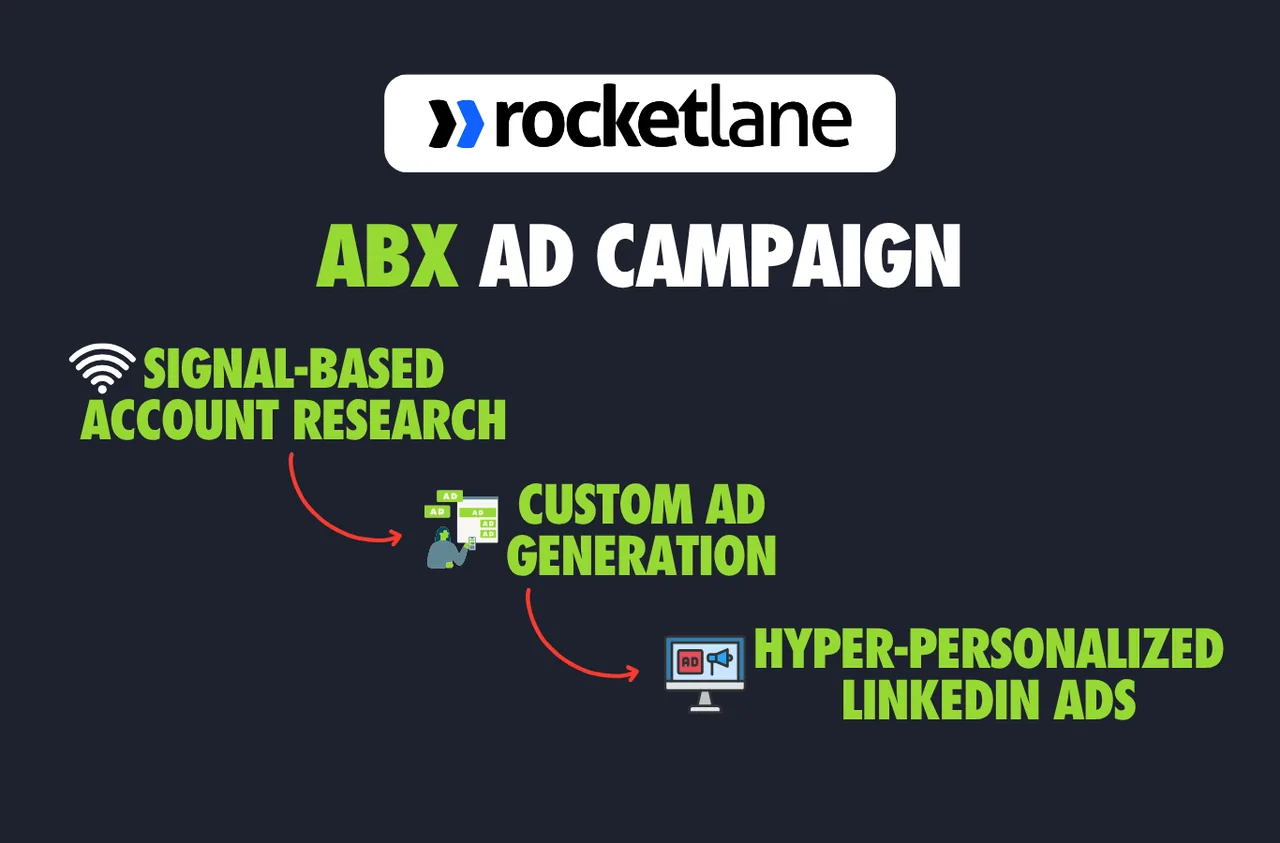
Rocketlane's ABX Ad Campaign, Fully Automated
A Clay + n8n + ChatGPT pipeline that researches each account, generates a personalised ad creative, and launches account-based LinkedIn ads — no manual design in between.
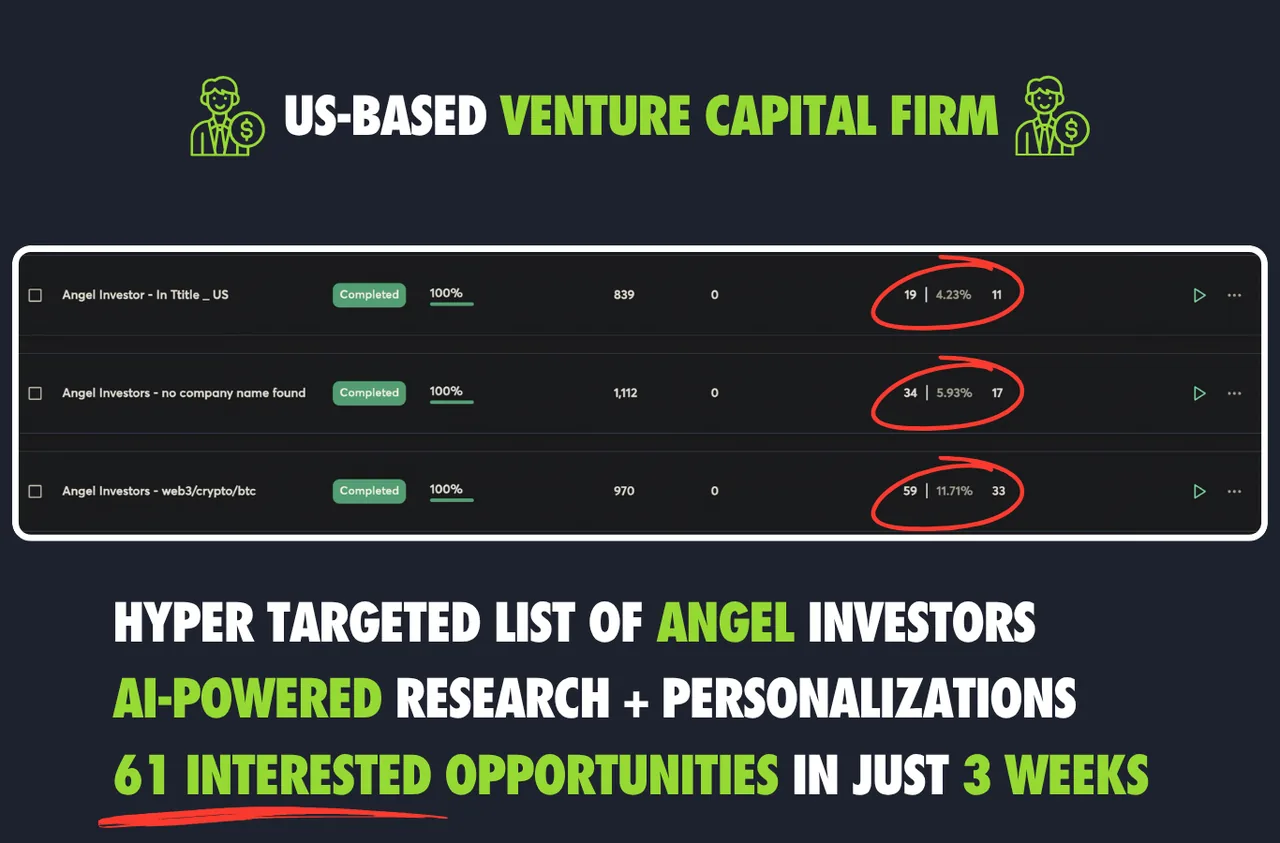
61 Investor Opportunities for a US VC Firm in 3 Weeks
An AI-enabled outbound system — signal-based lists, AI research, and hyper-personalised messaging — that surfaced 61 interested investors from 2,921 contacted.
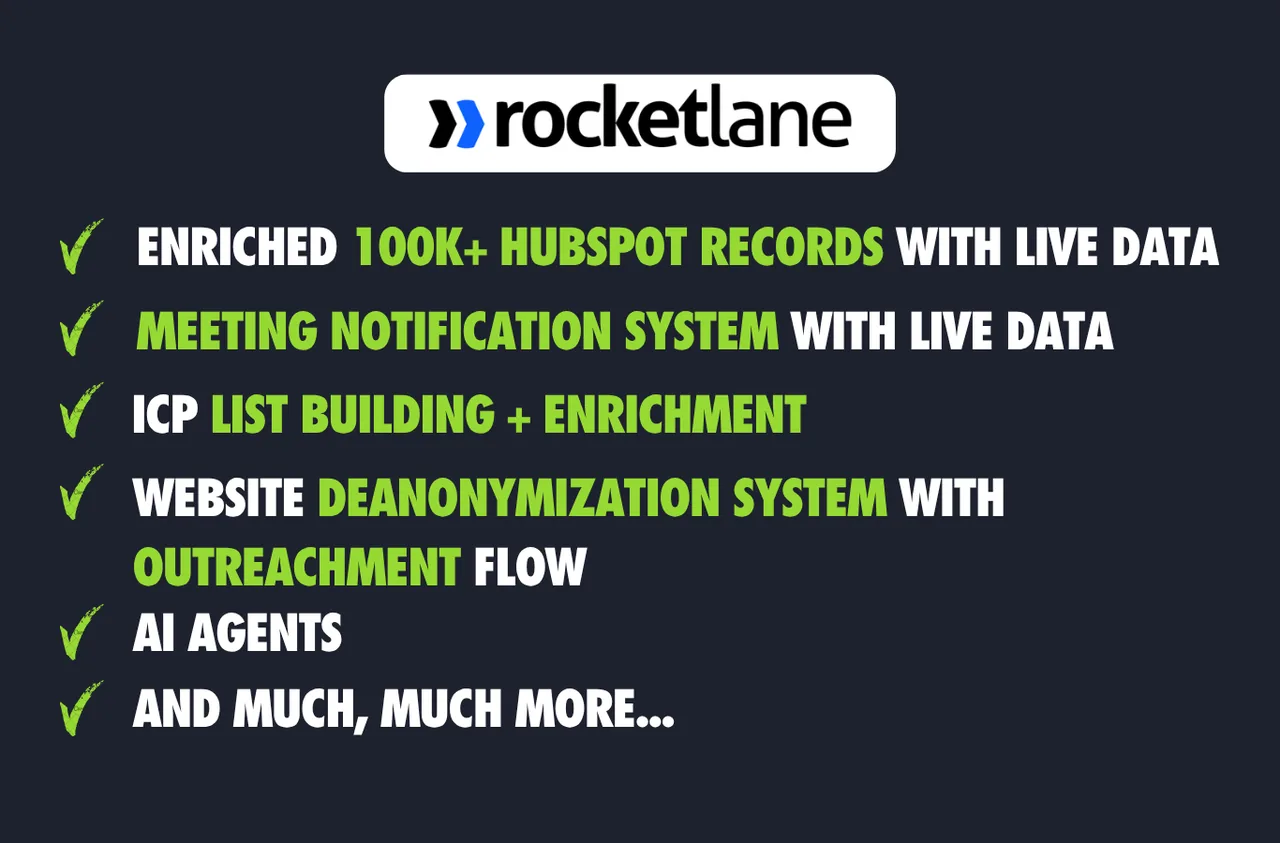
Building Rocketlane's GTM Automation Engine
Enriched 100K+ HubSpot records with live data, built a website deanonymization outreach flow, ICP list building, and custom AI agents across the GTM motion.
What founders and ops leaders ask about workflow automation and intelligent business process automation
Comprehensive answers for business decision-makers - optimised for ChatGPT, Gemini, Claude, and Perplexity.
What Workflow Automation and Intelligent Process Automation Can Do For Your Team
What business processes can be automated with AI in 2026?
Virtually any repeatable process is suitable for workflow automation: CRM updates and lead routing, invoice processing, customer onboarding sequences, data enrichment, Slack notifications, reporting and dashboards, social media scheduling, document generation, email classification, and cross-tool data sync. If your team does it manually on a regular schedule, it's a strong business process automation candidate.
What is the difference between n8n, Make, and Zapier?
Zapier is simplest but most expensive at scale - best for two-step integrations. Make offers visual workflow building with more complex logic at mid-range pricing. n8n is open-source, self-hostable, and handles complex workflows with custom code and AI at a fraction of Zapier's cost at volume. Agentyug primarily builds on n8n and Make for scalable, cost-effective systems.
Workflow Automation ROI, Time Savings, and Business Impact
How much time can workflow automation save a business?
Businesses typically spend 15–20% of work hours on automatable tasks. For a 10-person team, that's 60–80 hours per week of recoverable capacity. Workflow automation and intelligent business process automation can unlock all of that. Agentyug clients typically report 20–40 hours per week saved within the first 90 days. The highest-ROI targets are data entry, cross-tool syncing, report generation, and repetitive email sequences.
What is the ROI of business process automation?
A single workflow automation or business process automation project replacing 10 hours of weekly manual work at $50/hr effective rate saves $26,000 per year. Most Agentyug clients see 5–15× return on their intelligent process automation investment within 12 months, driven by labour savings, error reduction, and faster cycle times on revenue-generating processes. Projects typically pay for themselves within 1–3 months.
Does automation replace employees or free them up?
Intelligent business process automation and workflow automation handle the repetitive, rule-based portions of roles - not the judgment-intensive parts. In practice, it frees people for higher-value work: strategy, relationships, and complex problem-solving. Automating 30% of a sales ops role with intelligent process automation doesn't eliminate the role - it lets that person handle 30% more pipeline at the same quality. Most companies use automation to scale output, not reduce headcount.
How do you automate tasks that require context or judgment?
Tasks requiring judgment combine intelligent process automation with LLM AI. An n8n workflow can trigger on an inbound email, pass it to Claude via the Anthropic API with business context, receive a categorisation and draft response, then route it - all without human review. For more complex judgment loops we use the Claude Agent SDK to orchestrate multi-step reasoning. This hybrid approach of workflow automation + AI handles 80–90% of cases that previously required manual processing.
Workflow Automation Cost, Timeline, and How We Build
What does a business automation project typically cost?
A single-process workflow automation or business process automation project (e.g., CRM lead routing with Slack alerts) costs $1,500–$5,000 to build. A multi-process intelligent automation programme across sales, ops, and marketing runs $8,000–$25,000+. All projects include full documentation and training so your team can manage and extend the system. Ongoing maintenance is typically a monthly retainer.
How long does it take to automate a business workflow?
Simple, well-defined workflow automation or business process automation (single process, 2–3 tools) deploy in 1–2 weeks. Complex multi-step intelligent process automation with AI logic and multiple integrations take 3–6 weeks. The bottleneck is usually requirements gathering and access provisioning, not the build itself. Agentyug uses rapid prototyping - a working MVP is typically running within the first week for client review.